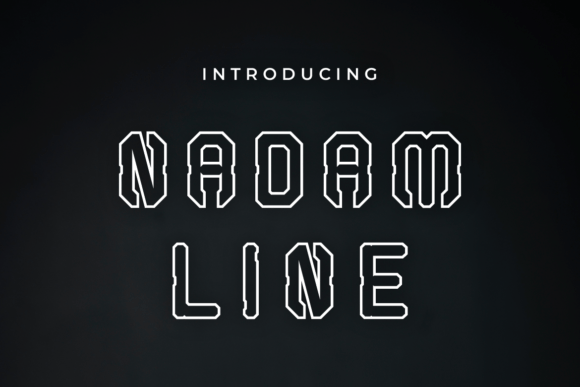
Nadam Line Display Font for Bold Branding
There’s something about starting a new branding project that feels like opening a blank canvas. Recently, I found myself staring at a fresh brand board, trying to find the right typeface to anchor a local bakery’s identity. After testing a few options, I landed on Nadam Line, and it turned out to be the perfect match.
Nadam Line for Logo Design and Brand Identity
Nadam Line is a bold and authentic display font, and its character immediately stood out when I applied it to a logo draft for a boutique café. The clean lines and strong strokes gave the logo a sense of confidence without feeling too heavy. It worked well with both minimalist and more textured backgrounds, making it adaptable for different brand identities.
I tested Nadam Line alongside other display fonts, but none had the same level of authenticity. It felt like a natural fit for brands looking to communicate strength and originality. Whether you're designing a logo for a creative studio or a small business, Nadam Line brings a unique visual voice to your brand.
Nadam Line in Packaging Mockups and Product Labels
Next, I used Nadam Line on a packaging mockup for a handmade soap line. The font's boldness translated well to product labels, where it needed to stand out against colorful illustrations and textures. Even in smaller sizes, it maintained legibility and presence, which is crucial for packaging design.
What I loved was how Nadam Line didn’t feel overpowering. It balanced strength with elegance, which is essential for products that aim to feel premium yet approachable. It’s clear that Nadam Line is suitable for any branding project like logo, t-shirt printing, esports, and many more.
Nadam Line for Social Media Graphics and Website Headers
When it came to social media layouts, Nadam Line performed exceptionally. On an Instagram post promoting the same handmade soap line, the font drew attention without overshadowing the imagery. Its modern typography made it ideal for digital content that needs to grab attention quickly.
On a website header, Nadam Line added a touch of sophistication. It paired well with a sans serif font for body text, creating a balanced contrast that improved readability while maintaining visual interest. This makes Nadam Line a great choice for web design and editorial design alike.
Testing Nadam Line for T-Shirt Printing and Merchandise
I also experimented with Nadam Line for t-shirt printing, and the results were impressive. The font’s boldness translated well to fabric, and it looked outstanding even in simple black-and-white designs. It’s a versatile option for merchandise, especially for brands in the esports or creative industries.
One thing to note is that Nadam Line works best as a display font rather than for long body text. For short phrases, headlines, or accents, it shines. But if you're planning to use it for extended paragraphs, consider pairing it with a complementary sans serif or serif font for better readability.
Choosing the Right Font Pairings with Nadam Line
Font pairing is always an important step in design, and Nadam Line offers a lot of flexibility. When I paired it with a clean sans serif font like Helvetica Neue, the result was modern and professional. For a more artistic look, a script font worked well as an accent, adding a touch of personality without clashing.
If you’re working on a brand that leans into bold visuals, Nadam Line can serve as the main typeface, supported by a secondary font for body text. Just make sure to maintain consistency across all design assets to reinforce brand recognition.
Practical Tips for Using Nadam Line in Real Projects
Before using Nadam Line in final client work, I recommend testing it in various contexts. Try it on a business card, a website header, and a social media layout to see how it performs under different conditions. Also, check the font’s file formats and webfont availability to ensure it works seamlessly across platforms.
Don’t forget to review commercial font licensing before using Nadam Line in client work, brand identity, packaging, templates, merchandise, websites, digital products, or print-on-demand products. Ensuring proper licensing is key to avoiding any legal issues down the line.